I Samuel 23: When God Guides in the Midst of Danger
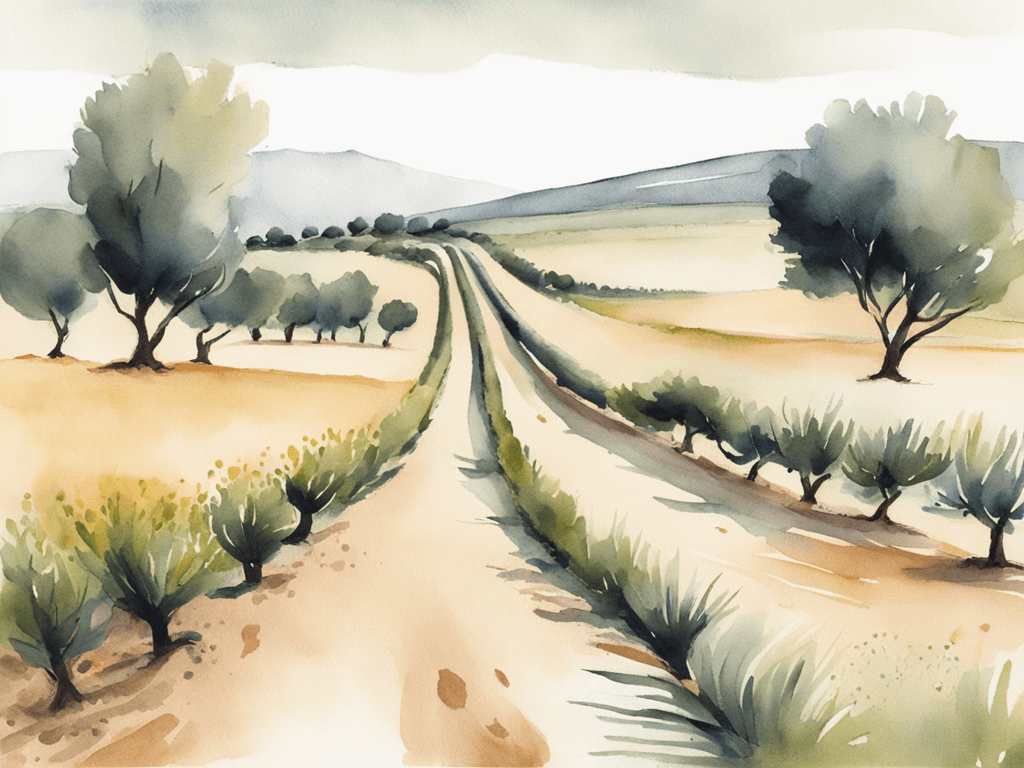
Fleeing, Fighting, and Trusting: David's Journey in 1 Samuel 23
Have you ever felt cornered? That feeling that no matter where you look, danger is lurking? David knew this feeling well. In chapter 23 of 1 Samuel, we find a man anointed to be king, yet living as a fugitive. A brave warrior being hunted like an animal. A leader chosen by God, but rejected by the current king.
This chapter is not just ancient history — it is a mirror for our own struggles. As we walk through its pages, we discover timeless principles on how to make difficult decisions, deal with betrayals, and find courage when everything seems to be falling apart.
The Context: Between Anointing and the Throne
To understand 1 Samuel 23, we need to visualize where David is in his journey. He has already been anointed king by Samuel — God's hand has already rested upon his head. But the throne still belongs to Saul, a man consumed by insecurity and jealousy. David has defeated Goliath, won military victories, and captured the hearts of the people. And precisely because of this, he has become a target.
Before this chapter, David had already escaped several assassination attempts. He gathered an unlikely group of followers — indebted, discontented, distressed. Not exactly an elite army. And now, instead of being in the palace preparing to reign, he is in the deserts and caves, surviving day by day.
Have you ever lived in the "in-between"? Between promise and fulfillment? Between calling and realization? David knew this arid territory.
Keilah: Risking for Others
The story begins with urgent news: the Philistines were raiding Keilah, an Israelite city. Imagine the scene — David, a wanted fugitive, receives information about an attack on a city that wasn't even his. Logic would say: "You have enough problems. Protect yourself first."
But David did not consult logic. He consulted God.
This attitude teaches us something profound: the pursuit of divine guidance is not a spiritual luxury for peaceful moments, but a vital necessity, especially when we are under pressure. David asked, "Should I go attack these Philistines?" And God answered, "Go, attack the Philistines and deliver Keilah" (v. 2).
When his men hesitated — after all, they were already afraid enough of Saul without adding Philistines to the equation — David did not impose his authority. He consulted God again. And once more, divine confirmation came, now with a specific promise of victory.
What a contrast to our modern world! How many decisions do we make based solely on convenience, fear, or social pressure? David shows us a different path: pause, ask, listen.
Practical Application 1: Prayer Before Action
Before your next important decision — accepting that job, confronting that person, making that investment — stop. Literally, stop. Create space to ask God. This may mean delaying a response for a day, seeking wisdom in the Scriptures, or simply sitting in silence before the Lord. Hurry is rarely God's counselor.
Keilah: The City That Almost Became a Trap
David saved Keilah. His men risked their lives, faced the Philistines, and liberated the city. You would expect eternal gratitude, right? A safe haven, at the very least?
But Saul saw the situation as an opportunity. "God has delivered him into my hands," he thought, "for David has made himself a prisoner by entering a city with gates and bars" (v. 7). What a bitter irony — David's act of mercy would become his trap.
Once again, David did not trust his own perception. He brought the ephod — the priestly instrument used to seek God's will — and asked specific questions:
"Lord, God of Israel, is Saul planning to come to Keilah to destroy the city because of me?"
"Will the citizens of Keilah deliver me into his hands?"
The answers were brutally honest: Yes. Yes.
The city that David saved would deliver him to his pursuer. Have you ever experienced ingratitude after doing good? Have you invested in relationships that disappointed you? Have you risked to help and received betrayal in return? You are not alone.
Practical Application 2: Doing Good with Wisdom
David teaches us that doing the right thing does not make us immune to human disappointment. But this should not paralyze us. Did he save Keilah? Yes. Did he blindly trust the people of Keilah? No. Kindness requires courage; wisdom requires discernment. We can be generous without being naïve, compassionate without being foolish. And when people disappoint us, we remember that our security has never been in them, but in God.
Jonathan: The Friendship That Strengthens
In the midst of chaos, something extraordinary happens. Jonathan, Saul's son — the one who should inherit the throne that God promised to David — comes to meet him in the desert. And he does not come to compete or negotiate. He comes to "strengthen David's hand in God" (v. 16).
What a powerful expression! Jonathan did not offer money, an army, or military strategy. He strengthened David's hand in God. He reminded him of God's promises: "Do not fear; Saul, my father, will not find you; you will reign over Israel, and I will be with you as second" (v. 17).
Jonathan renounced his own right to the throne to encourage his friend. He saw beyond his personal interests and recognized God's purpose in David's life. This is friendship at the deepest level — not one that tells you what you want to hear, but one that points you to where God is leading you.
Practical Application 3: Be a Jonathan to Someone
Who in your life needs to have "their hand strengthened in God"? Perhaps a discouraged friend, a brother in faith going through trials, someone who has forgotten God's promises. You can be that Jonathan for someone. Not with empty spiritual clichés, but with specific reminders of God's character and promises. Sometimes, a simple message, an unexpected visit, or a sincere prayer is all someone needs to keep going.
The Pursuit That God Interrupted
The Ziphites — people from David's own tribe, Judah — went to Saul and delivered David's exact location. More betrayal. More pursuit. Saul came down with his army, and the situation became desperate.
David and his men were on one side of the mountain. Saul and his army were on the other, surrounding them. The text says that David "was hurrying" to escape (v. 26). It was a matter of minutes before they would be captured.
And then, just when everything seemed lost, a messenger came to Saul: "Hurry and come, for the Philistines have invaded the land" (v. 27).
God was not late. He was right on time.
Saul had to abandon the pursuit. David breathed again. And that place was called "The Rocks of Escape" — a memorial of how God intervenes when we have no way out.
Practical Application 4: Trust in God's Timing
Perhaps you are surrounded today. Not by literal armies, but by debts, illnesses, conflicts, or fears. It seems there is no escape. The noose is tightening. Learn from David: keep moving toward God, even when you don’t see a way out. God has a thousand ways to deliver you that you cannot even imagine. Sometimes He opens a path at the last second — not because He is late, but because He wants you to clearly recognize that it was He who saved you.
Lasting Lessons from a Turbulent Chapter
1 Samuel 23 is more than history — it is practical theology. It shows us that:
Life with God does not eliminate difficulties. David was doing God's will and still faced persecution, betrayal, and threats. Being a Christian does not shield us from storms; it gives us an anchor during them.
Seeking God repeatedly is not a lack of faith; it is spiritual maturity. David consulted God multiple times in this chapter. Each new situation required new guidance. Our relationship with God should be continuous, not occasional.
People will disappoint you; God never will. Keilah would have delivered him. The Ziphites betrayed him. But God has always been faithful. Place your ultimate trust where it will never be broken.
Godly friendships are gifts from God. In the midst of the literal and emotional desert, Jonathan was an oasis. Cultivate and value friends who point you to God, not just to human solutions.
Connecting with the Whole Scripture
David's pursuit of divine guidance echoes throughout the Bible. James 1:5 encourages us: "If any of you lacks wisdom, let him ask of God, who gives to all liberally and without reproach, and it will be given to him."
The friendship between David and Jonathan anticipates what Jesus would say centuries later: "Greater love has no one than this: to lay down one's life for one's friends" (John 15:13). Jonathan died without seeing David as king, but his loyalty remained unwavering.
And David's last-minute deliverance reminds us of countless other divine interventions — Israel at the Red Sea, Daniel in the lion's den, Peter in prison. Our God specializes in impossible rescues.
Questions for Your Journey
As you reflect on 1 Samuel 23, consider:
How do you make important decisions? Is your first stop prayer or planning? David challenges us to reverse that order.
Who are the "Jonathans" in your life? And to whom have you been a Jonathan? Friendships that strengthen our faith are rare and precious — cultivate them intentionally.
How do you respond to betrayal and ingratitude? David did not become cynical or vengeful. He continued doing good and trusting God. Is that possible for you?
A Final Invitation
David's story in 1 Samuel 23 did not end. He would continue fleeing, fighting, trusting. But each experience shaped him for what was to come — not just as king of Israel, but as "a man after God's own heart" (1 Samuel 13:14).
Perhaps today you are in your own chapter 23. Surrounded, weary, questioning when God's promises will be fulfilled. Remember: the "in-between" has purpose. It is in the desert that we learn to seek God. It is in trial that we discover who is truly with us. It is in waiting that our faith deepens.
So pause today. As David did repeatedly, bring your questions, fears, and decisions before God. He is not distant or uninterested. He is near, ready to guide, strengthen, and, at the right moment, deliver.
And while you wait, remember Jonathan's words to David: "Do not fear." The God who wrote the promises over your life is the same one who will fulfill them — in His perfect timing, in His sovereign way.
You are not alone in the desert. And this chapter of your story is not the end.